
What does a women's health GP actually do?
A women's health GP is a general practitioner with additional training and a specific focus on women's health. They diagnose and manage periods and pelvic pain, contraception, fertility, pregnancy and postnatal care, menopause and pelvic-floor concerns — usually in longer appointments. No referral is needed for an initial assessment at Elysian.
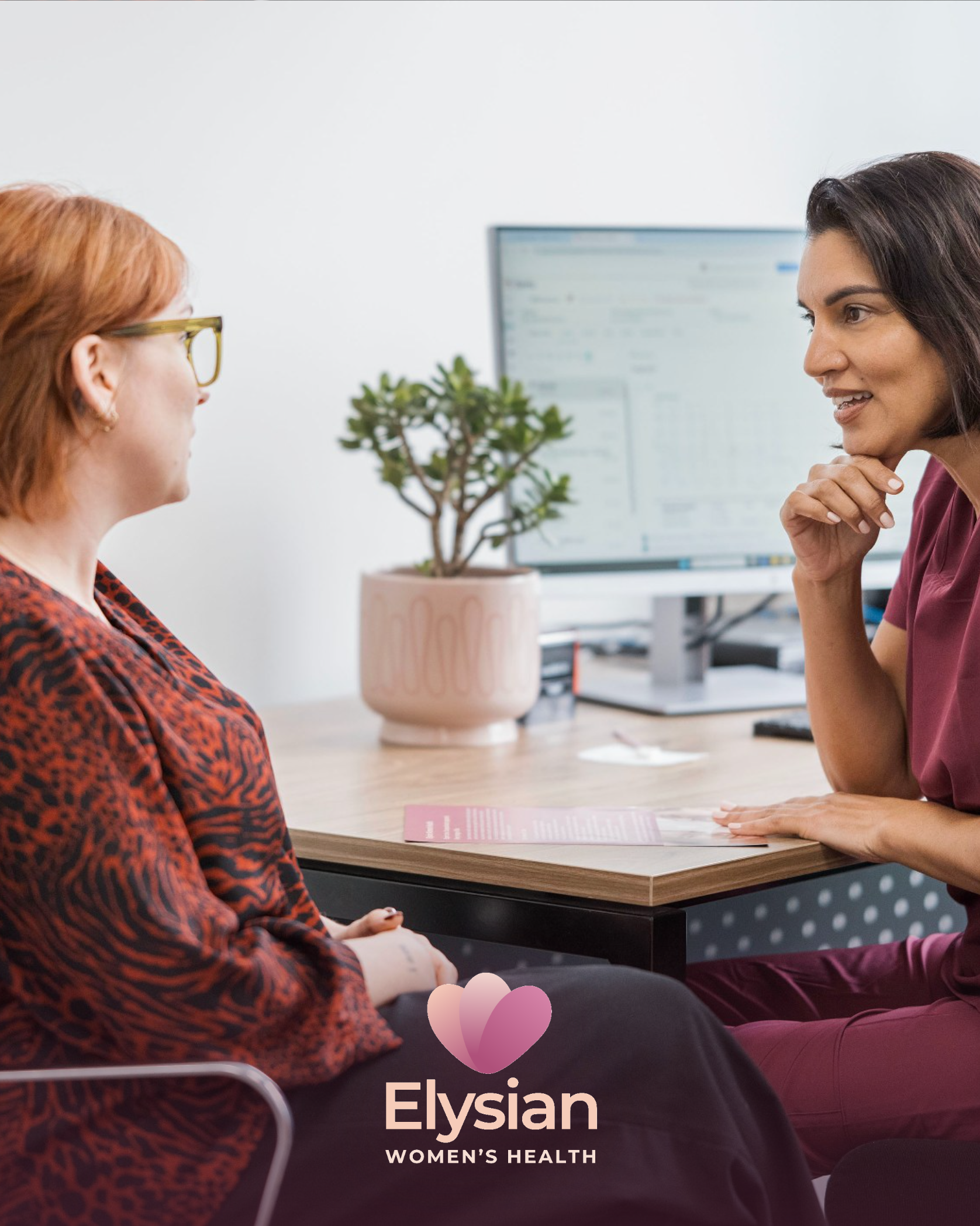
Many women know the experience of raising something in a ten-minute appointment and running out of time before the real question. Periods that stop you working. Pain during sex you have never said out loud.
Women's health care is built for those conversations.
What is a women's health GP?
A women's health GP is a fully qualified general practitioner with further training in gynaecological and reproductive health who works in this area day to day. That focus matters: endometriosis, PMOS, heavy bleeding, perimenopause and bladder leakage are conditions they see weekly, not once a year.
At Elysian, our GPs sit inside a multidisciplinary team (nurse practitioners, a pelvic-floor physiotherapist and a dietitian) so an assessment can become a coordinated plan without you starting again elsewhere.
What conditions do they manage?
Heavy, painful or irregular periods, and pain between periods
Suspected endometriosis, adenomyosis or chronic pelvic pain
Polyendocrine metabolic ovarian syndrome (PMOS, formerly known as polycystic ovary syndrome, PCOS) and other hormonal concerns
Contraception advice, including IUD and implant insertion and removal
Preconception planning, fertility assessment, pregnancy and postnatal care
Perimenopause and menopause symptom management
Bladder leakage, prolapse symptoms and pelvic-floor concerns
Cervical screening and sexual health, including self-collection
How is it different from a standard GP visit?
Appointments at Elysian Womens Health are longer because history-taking is unhurried. The clinician routinely examines and investigates gynaecological symptoms, so the next step is usually decided in the room. And the pathway forward (imaging, blood tests, physiotherapy, specialist review) is coordinated by a team that already communicates.
The other difference is tone. Much of women's health care is undoing years of being told pain is normal, that leaking is part of having children, or that you are too young for menopause to matter. The appointment starts from the assumption that what you describe is real.
When should you book?
Sooner than most people do. Book if a symptom is changing your daily life: time off work, plans cancelled, sleep disrupted, intimacy avoided.
Book if bleeding is heavy enough to need double protection, if pain is not settling with simple pain relief, if you bleed after sex or after menopause, or if you have been trying to conceive for 12 months (6 if you are over 35).
What happens at a first appointment?
You will be asked about your cycle, symptoms, history and what you want from your care. An examination may be offered, and it is always your choice, including whether it happens at that visit. Tests are explained before they are ordered. You leave with a written plan and a clear next step.
Frequently asked questions
-
No. You do not need a referral for an initial assessment with a women's health GP at Elysian. A referral is only required for specialist gynaecology review under certain arrangements. Book an appointment now at elysianwomenshealth.com.au
-
A women's health GP is a general practitioner with additional training in women's and reproductive health. They manage periods and pelvic pain, contraception, fertility, pregnancy care, menopause and pelvic-floor concerns, and coordinate care with gynaecologists and allied health practitioners.
-
Longer than a standard GP consultation. Initial assessments are booked to allow unhurried history-taking, examination if appropriate, and time to agree a plan. Ask reception which appointment length suits what you want to discuss.
Book an appointment now
elysianwomenshealth.com.au
1300 124 333
No referral needed for an initial assessment
